Computational virology · Structural biology · Phylodynamics

M H M Mubassir Evolution leaves a
structural signature.

I study how viral evolution changes molecular structure, receptor biology, and host range, linking global phylogenetics with structural biology.

Ph.D. Candidate, Bioinformatics University of Georgia
37K+global H5 HA sequences
4K+unique H5 variants
1996 to 2026global evolutionary window
Scroll

00 / About

MHM
Portrait of M H M Mubassir
Athens, GeorgiaStructure · evolution · phylodynamics

Scientist, educator,
framework builder.

I am a Ph.D. candidate in Bioinformatics at the University of Georgia, advised by Dr. Justin Bahl, and a Lecturer at BRAC University.

My training spans agriculture, biotechnology, bioscience, pharmacy, protein design, and bioinformatics. I have worked across influenza A and B, RSV, hMPV, SARS-CoV-2, mpox, and plant immune receptors. This experience shaped how I approach viral emergence as a connected problem across evolution, structure, molecular mechanism, ecology, and computation.

CurrentBahl Lab · UGA
Ph.D. expected2027
TeachingTop 1% evaluation
TrainingBioinformatics · Pharmacy · Bioscience

Outside science I enjoy filmmaking and visual storytelling.

01 / Scientific vision

From genetic diversity
to functional risk.

Rather than studying mutations in isolation, I investigate how standing phenotypic diversity emerges across whole viral populations, and how that diversity shapes future host transitions.

My long-term goal is to identify functional evolutionary change before it becomes visible through outbreaks, enabling earlier surveillance, improved risk assessment, and more proactive pandemic preparedness.

01Genetic diversityPopulation variation
02Structural consequenceReceptor biology
03Functional breadthStanding phenotype
04Cross-host riskEarlier signal

02 / Research ecosystem

Integrating evolution,
structure, and ecology.

Drag any bubble · tap a domain to focus · select a tool to inspect
Domains · methods · tools · biological systems
Interactive map of M H M Mubassir's research ecosystem A responsive network connecting viral systems, structural biology, molecular dynamics and docking, phylodynamics, epidemiology and preparedness, future predictive biology, and scientific computing.
Research map

How I study viral evolution

Explore the connected biological questions, methods, and software that link viral evolution with structure, ecology, and preparedness.

Research ecosystem

    03 / Structural biology

    Structure,
    in real space.

    An experimental H5 hemagglutinin structure anchors the structural side of my research, connecting receptor recognition, molecular dynamics, energetic interpretation, and evolutionary change.

    ProteinH5 HA trimer
    VirusA/Texas/37/2024
    LigandAvian analog LSTa
    Resolution2.32 Å

    Drag to rotate · scroll to zoom · open the PDB record for full experimental details.

    Structure source PDB 9DIP, reported by Lin et al. in Science 386, 1128 to 1134 (2024). Paper PDB record

    Experimental structure 9DIP
    Experimental structure

    H5 hemagglutinin trimer

    A/Texas/37/2024 (H5N1) · bound to the avian receptor analog LSTa

    X-ray diffraction2.32 Å PDB 9DIP

    04 / Research visualization · Phylodynamics

    Evolution,
    seen in motion.

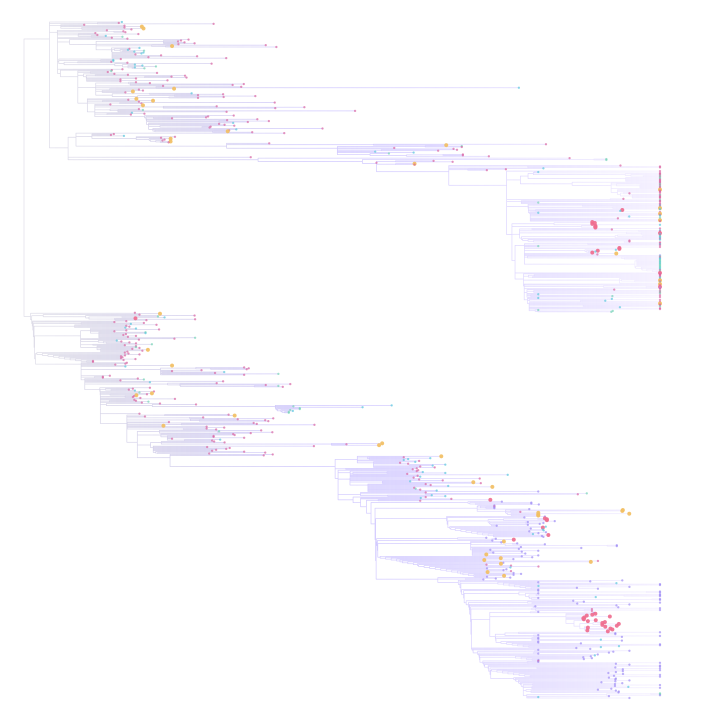
    This animated phylogeny introduces the evolutionary history of U.S. H5N1 clade 2.3.4.4b. Play the timeline here, then open the full Nextstrain build to explore lineage structure, host transitions, geography, and phenotype-aware annotations.

    Open full Nextstrain Animated overview · live tree opens separately
    PhylogenyHostStructurePhenotype
    Animated phylogeny of U.S. H5N1 clade 2.3.4.4b
    Evolutionary timeJan 2021
    Explore live tree
    13K+U.S. HA sequences
    2,195unique HA variants
    Host-awareavian · cattle
    Phenotype-awaresequence · structure · function

    05 / Current research program

    Two current projects,
    one future direction.

    A connected program that moves from population-scale H5 evolution to structure-informed prediction.

    01

    Aim 1 · United States · 2021 to 2025

    A population-scale phenotype atlas of H5N1 clade 2.3.4.4b

    What functional capacity was already present before and during emergence in cattle?

    This project integrates approximately 13,000 U.S. hemagglutinin sequences and 2,195 unique HA variants with a time-resolved phylogeny, AlphaFold 3 structures, receptor-binding-site geometry, physicochemical traits, Rosetta and FoldX energetics, molecular dynamics simulations, and glycan-binding interpretation. It tests how standing phenotypic breadth, lineage sorting, and distributed structural change shape cross-host potential.

    First-author manuscript under review at Nature
    13K+ HA sequences2,195 variantsAvian and cattle lineages
    • Sequence
    • Structure
    • Function
    • AlphaFold 3
    • Rosetta
    • Molecular dynamics
    • Nextstrain
    AVIANCATTLEAVIANCATTLEPHENOTYPE SCANNERSEQUENCESTRUCTUREFUNCTION
    02

    Aim 2 · Global H5 · 1996 to 2026

    A global evolutionary and phenotypic atlas of H5

    How do ecological opportunity, host movement, and phenotypic breadth combine to shape the global evolutionary history of H5?

    Using more than 37,000 H5 hemagglutinin sequences collected from 1996 through 2026, this aim reconstructs how genetic and phenotypic diversity is generated, transmitted, and retained across hosts, regions, clades, and epidemic waves. Time-scaled phylogenies and phylogeographic models quantify lineage movement, host transitions, persistence, and reassortment. Markov jumps and rewards estimate cross-host flow and residence, while structure-derived receptor-binding, stability, and physicochemical traits map functional change onto the tree. The objective is to identify repeatable evolutionary phases and lineages where ecological opportunity converges with phenotypic breadth, creating priority targets for surveillance.

    Global dataset curated through 2026
    37K+ HA sequences4K+ variants1996 to 2026
    • Phylogeography
    • Host transitions
    • Markov jumps and rewards
    • Lineage persistence
    • Reassortment
    • Structural phenotype
    TIME-SCALED PHYLOGENY19962026DISPERSAL AND HOST FLOWWILD BIRDSPOULTRYCATTLEFUNCTIONAL LAYERSBINDINGSTABILITYCHARGEEVOLUTIONARY PHASESDIVERSIFICATIONDISPERSALPERSISTENCEPRIORITY
    03

    Future direction · Predictive evolutionary biology

    A structure-informed predictive framework for phenotype and lineage fate

    Can evolutionary history, protein structure, host ecology, and measured phenotype be learned together rather than analyzed as separate data streams?

    This future program will develop statistical and machine-learning frameworks that jointly represent sequence variation, time-scaled phylogenies, protein structure, receptor-site geometry, phenotype, host transitions, and ecological context. The conceptual architecture combines protein language models with structure-aware encoders, multimodal fusion, and flow matching to trace phenotype evolution, rank lineage fate, and identify surveillance priorities. RFdiffusion provides a reference for generative structural modeling, while the central methodological goal remains structure-informed phylodynamics. Foundational training and pilot design are in progress.

    Foundational training and pilot design in progress
    Future directionJoint evolutionary modelPilot studies planned
    • Protein language models
    • Flow matching
    • Multimodal learning
    • Structure-informed phylodynamics
    • RFdiffusion
    SEQUENCEPHYLOGENYSTRUCTUREHOST AND ECOLOGYFLOW MATCHINGMULTIMODAL FUSIONPREDICTIVE OUTPUTSPHENOTYPE EVOLUTIONLINEAGE FATERISK

    06 / Earlier platforms

    Built across
    multiple viruses.

    My structural-biology foundation began in computational vaccine and antigen design, before expanding into population-scale viral evolution.

    AM.S. thesis · Influenza H3N2

    Consensus-based influenza vaccine design

    Designed and evaluated consensus HA immunogens to capture sequence diversity while preserving structurally and antigenically important regions, using comparative modeling and integrated sequence and structure analysis.

    Consensus designHAAntigen engineering
    BStrauch Lab · Viral fusion proteins

    A Rosetta-guided proline scanner

    Developed a computational design workflow that introduced candidate proline substitutions, evaluated structural consequences, compared energetic scores, and prioritized mutations for prefusion stabilization across influenza, RSV, hMPV, and SARS-CoV-2 systems.

    RosettaPrefusion stabilizationProline scanning
    CRespiratory-virus structural biology

    Multi-virus protein and antigen modeling

    Applied structure prediction, energetic analysis, docking, and molecular dynamics simulation to questions in receptor specificity, glycosylation, antigen conservation, and vaccine design across respiratory viruses.

    RSVhMPVSARS-CoV-2Influenza A/B
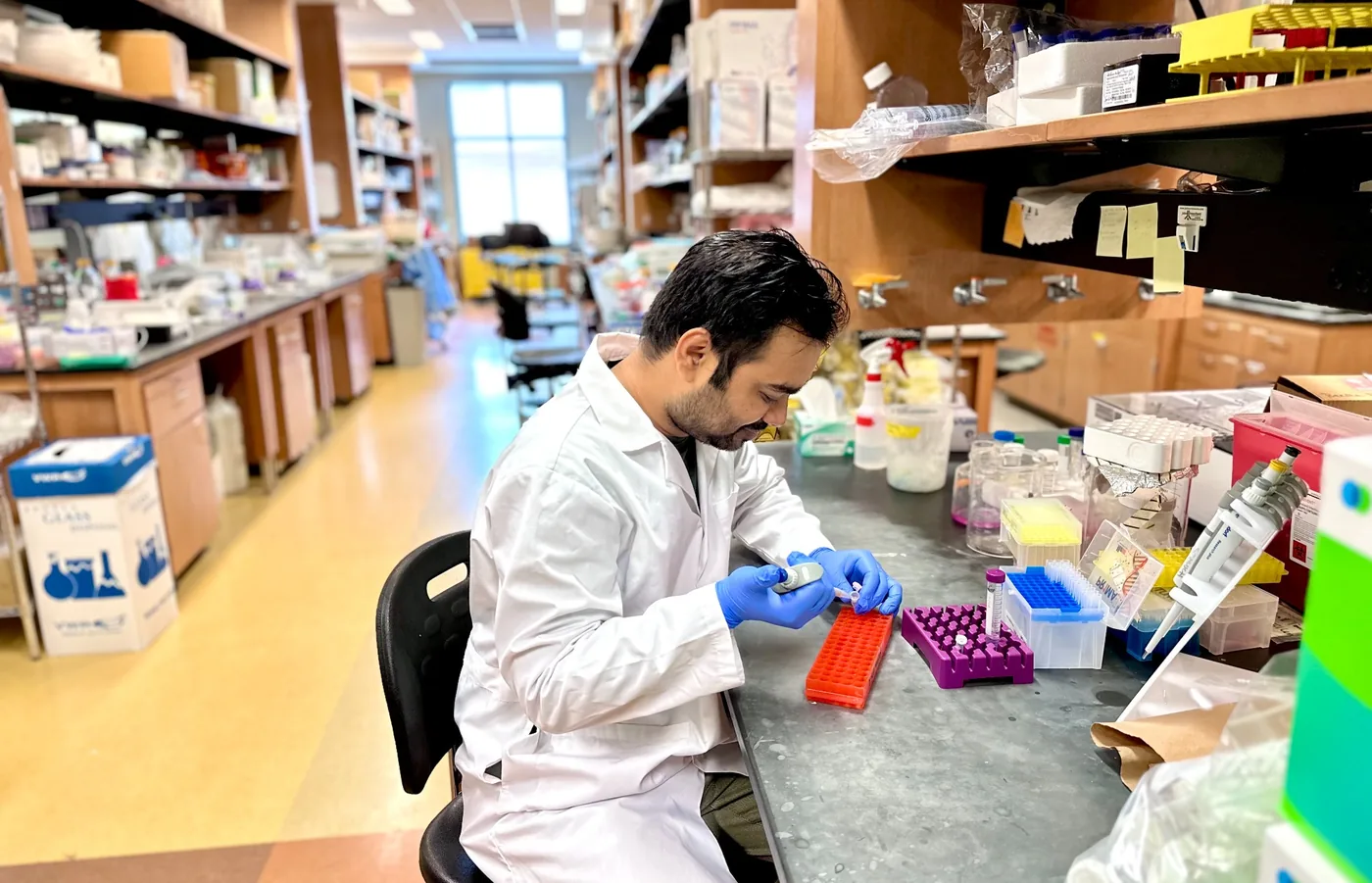
    M H M Mubassir pipetting samples at the bench
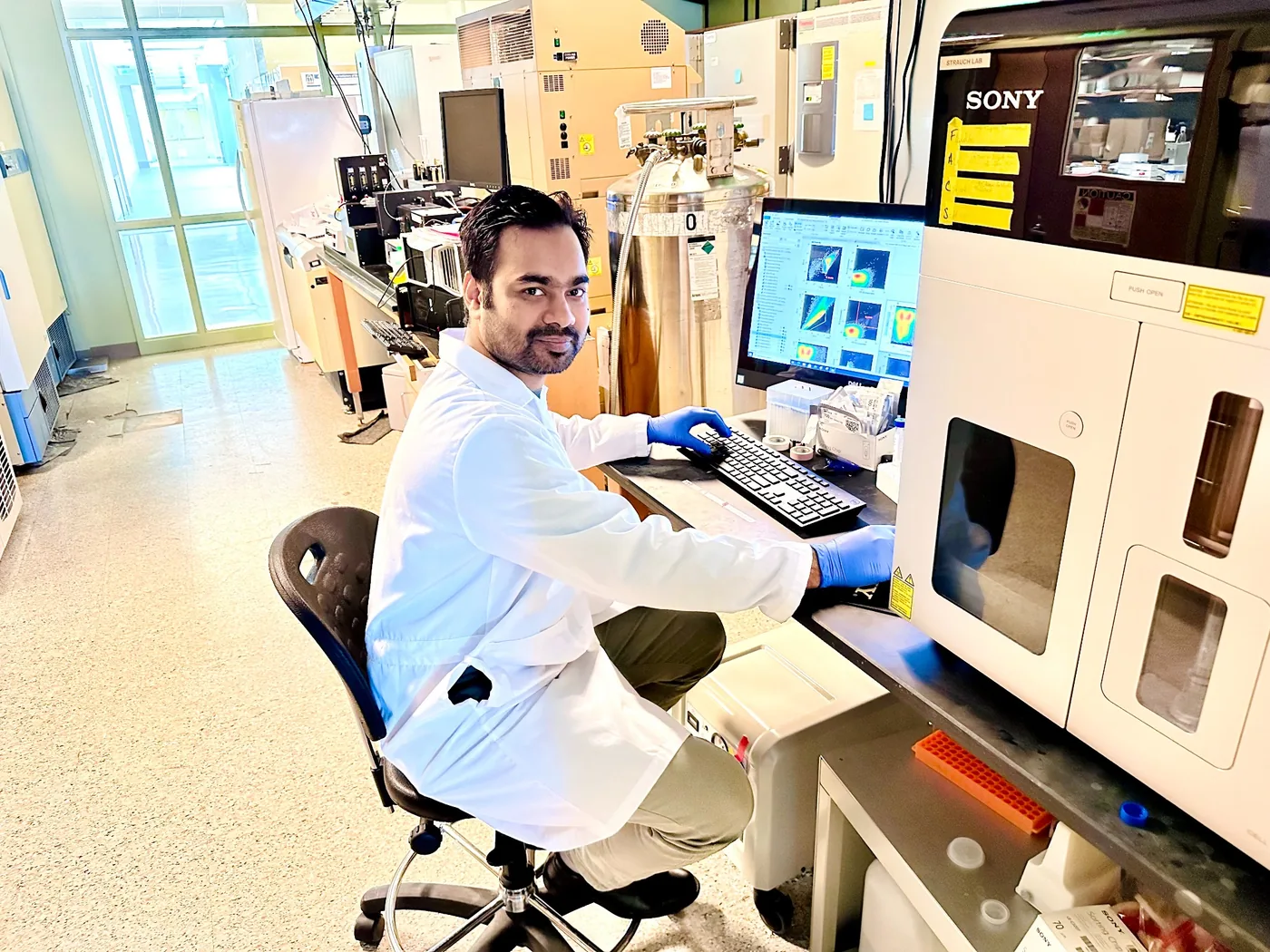
    M H M Mubassir operating laboratory instrumentation

    Experimental foundations

    Computational questions grounded in basic wet-lab experience.

    I have foundational hands-on experience with DNA extraction and purification, PCR, agarose gel electrophoresis, marker-assisted selection, basic cell-culture training, and protein purification. This background supports how I interpret molecular, structural, and experimental data without overstating my role as a primarily computational scientist.

    DNA extractionDNA purificationPCRGel electrophoresisMarker-assisted selectionCell-culture basicsProtein purification
    Influenza AInfluenza BRSVhMPVSARS-CoV-2Mpox

    07 / Publications

    Selected work.

    Influenza receptor biology, structural evolution, H5 phylodynamics, protein language models, epidemic modeling, and computational protein science.

    UNDER REVIEW · NATUREH5N1 · PHENOTYPE · CROSS-HOST POTENTIAL

    Standing HA phenotypic breadth shapes H5N1 cross-host potential.

    A population-scale framework connecting H5N1 genetic diversity with structural phenotype, receptor-binding potential, host transitions, and cross-host emergence.

    M H M Mubassir, S. Subedi, T. Rajamand, M. Bakheet, L. R. Carmola, S. Peng, R. Kandel, G. Stott, R. J. Woods, S. M. Tompkins, G. J. Boons, J. Bahl
    Google Scholar
    2026
    Under review · Nature

    Standing HA phenotypic breadth shapes H5N1 cross-host potential

    Mubassir, M. H. M.; Subedi, S.; Rajamand, T.; Bakheet, M. A.; Carmola, L. R.; Peng, S.; Kandel, R.; Stott, G.; Woods, R. J.; Tompkins, S. M.; Boons, G. J.; Bahl, J.

    Nature · Manuscript under review

    2026
    Preprint · Under review

    Dynamic Risk Maps Predict Highly Pathogenic Avian Influenza Hotspots Across North America

    Bakheet, M. A.; Babasola, O.; Næsborg-Nielsen, C.; Subedi, S.; Mubassir, M. H. M.; Peng, S.; Rajamand, T.; Bahl, J.

    Research Square

    2026
    Under review

    Ecological and evolutionary drivers of 2.3.4.4b H5Nx HPAI spread in Europe

    Subedi, S.; Mubassir, M. H. M.; Rajamand, T.; Bakheet, M. A.; Carmola, L. R.; Lyu, L.; Babasola, O.; Peng, S.; Liu, Y.; Kirkeby, C.; Bahl, J.

    Communications Biology · Manuscript under review

    2026
    Published

    A phylogeny-informed mathematical modeling of HPAI H5N1 transmission dynamics and effectiveness of control measures

    Babasola, O.; Bakheet, M.; Næsborg-Nielsen, C.; Subedi, S.; Mubassir, M. H. M.; Bahl, J.

    One Health 23, 101490

    2026
    Published

    A time-delayed epidemic model for control of highly pathogenic avian influenza (HPAI H5Nx) with vaccination, compliance, and non-pharmaceutical interventions

    Babasola, O.; Bakheet, M.; Næsborg-Nielsen, C.; Subedi, S.; Mubassir, M. H. M.; Bahl, J.

    Frontiers in Public Health 14, 1819528

    2025
    Editor’s Pick

    N-glycosylation at the receptor binding site drives differences in receptor binding specificity between influenza B virus lineages

    Page, C. K.; Mubassir, M. H. M.; Chopra, P.; Gay, L. C.; Geiger, G.; Ray, S. D.; Shepard, J. D.; Miller, R. J.; Perez, D.; Bahl, J.; Boons, G. J.; Tompkins, S. M.

    Journal of Virology 99(11), e01039-25

    2025
    Published

    Evolving fitness and immune escape: A retrospective analysis of SARS-CoV-2 spike protein (2020–2024) using a protein language model

    Peng, S.; Lyu, L.; Carmola, L. R.; Subedi, S.; Mubassir, M. H. M.; Bakheet, M. A.; Bahl, J.

    Frontiers in Immunology 16, 1576414

    2026
    In preparation

    MHC-II-EpiPred: Sliding-window scanning for MHC class II epitope discovery via a protein language model

    Peng, S.; Carmola, L. R.; Lyu, L.; Subedi, S.; Mubassir, M. H. M.; Bakheet, M. A.; Bahl, J.

    Collaborative manuscript in preparation

    2026
    In preparation

    PhyloSpillover: Graph neural network-based prediction of pre-emergence zoonotic spillover risk from avian influenza H5N1 using multi-host phylodynamic simulations

    Subedi, S.; Mubassir, M. H. M.; Rajamand, T.; Bakheet, M. A.; Carmola, L. R.; Babasola, O.; Peng, S.; Bahl, J.

    Collaborative manuscript in preparation

    2026
    In preparation

    A graph neural network framework for epidemiologically informed phylodynamics of avian influenza H5N1 reassortment in Europe

    Subedi, S.; Mubassir, M. H. M.; Rajamand, T.; Bakheet, M. A.; Carmola, L. R.; Babasola, O.; Peng, S.; Bahl, J.

    Collaborative manuscript in preparation

    2026
    In preparation

    Phenotypic diversity as an early signal of zoonotic spillover risk

    Mubassir, M. H. M.; Subedi, S.; Rajamand, T.; Bakheet, M. A.; Carmola, L. R.; Peng, S.; Babasola, O.; Tompkins, S. M.; Boons, G. J.; Bahl, J.

    Distinct follow-up manuscript in preparation

    2026
    In preparation

    Host lineage shapes gut microbiome structural architecture at the poultry–wildlife interface of avian influenza

    Næsborg-Nielsen, C.; Mubassir, M. H. M.; Carmola, L. R.; Peng, S.; Babasola, O.; Bakheet, M. A.; Bahl, J.

    Collaborative manuscript in preparation

    2026
    In preparation

    A reproducible R-based protocol for preprocessing avian influenza A (H5Nx, clade 2.3.4.4b) sequence data from GISAID for phylogenetic analysis

    Rajamand, T.; Subedi, S.; Mubassir, M. H. M.; Bakheet, M. A.; Bahl, J.

    Collaborative manuscript in preparation

    2026
    In preparation

    Standardized wild and domestic host annotations for global avian influenza A (H5Nx, clade 2.3.4.4b) sequences: A curated classification resource

    Rajamand, T.; Subedi, S.; Mubassir, M. H. M.; Bakheet, M. A.; Bahl, J.

    Target journal: Scientific Data

    2026
    In preparation

    Modeling the risk of HPAI H5N1 spread through cattle networks: Implications for cross-species transmission and pandemic prevention

    Rajamand, T.; Subedi, S.; Mubassir, M. H. M.; Bakheet, M. A.; Lyu, L.; Babasola, O.; Bahl, J.

    Collaborative manuscript in preparation

    2026
    In preparation

    Quantifying cross-host transmission and seasonal phase structure of U.S. H5N1 using integrated phylodynamics and incidence

    Bakheet, M. A.; Babasola, O.; Næsborg-Nielsen, C.; Subedi, S.; Mubassir, M. H. M.; Peng, S.; Rajamand, T.; Bahl, J.

    Collaborative manuscript in preparation

    2024
    Published

    A mathematical model for understanding and controlling monkeypox transmission dynamics in the United States and its implications for future epidemic management

    Islam, M. A. I.; Mubassir, M. H. M.; Paul, A. K.; Shanta, S. S.

    Decoding Infection and Transmission 2, 100031

    2023
    Published

    Effect of D128N mutation in OsSERK2 in Xa21-mediated innate immunity

    Mubassir, M. H. M.; Alvy, R. I.

    Advances in Agriculture

    2022
    Published

    How Arabidopsis receptor-like kinase 7 (RLK7) manifests: Delineating its structure and function

    Chowdhury, R.; Mubassir, M. H. M.

    Advances in Agriculture 2022, 4715110

    2020
    Published

    Comprehensive in silico modeling of multi-domain plant PRR Xa21 and its interaction with PAMP RaxX21-sY

    Mubassir, M. H. M.; Naser, M. A.; Abdul-Wahab, M. F.; Jawad, T.; Alvy, R. I.; Hamdan, S.

    RSC Advances 10(27), 15800–15814

    2019
    Published

    A brief overview on early events of Xa21-mediated pattern-triggered immunity

    Mubassir, M. H. M.; Naser, M. A.; Abdul-Wahab, M. F.; Hamdan, S.

    Journal of Chemical and Pharmaceutical Sciences 12(2), 1–5

    2019
    Published

    A synopsis of different plant LRR-RLK structures and functionality

    Mubassir, M. H. M.

    American Journal of Biomedical Science & Research 1(2), 84–86

    2017
    Published

    In-silico structural modeling and molecular dynamics simulation of pathogen-associated molecular pattern RaxX21

    Mubassir, M. H. M.; Naser, M. A.; Abdul-Wahab, M. F.; Hamdan, S.

    Journal of Chemical and Pharmaceutical Sciences 10(1), 121–126

    2016
    Published

    Measurement of phenotypic variation for control and bacterial-leaf-blight-inoculated rice lines and varieties

    Mubassir, M. H. M.; Nasiruddin, K. M.; Shahin, N. H.; Begum, S. N.; Sultana, A.; Rashid, A. Q. M. B.

    American Journal of Bioscience and Bioengineering 4(6), 59–64

    2016
    Published

    SSR marker-based genetic diversity analysis of some rice lines and varieties for bacterial leaf blight resistance

    Mubassir, M. H. M.; Nasiruddin, K. M.; Shahin, N. H.; Begum, S. N.; Saha, M. K.; Rashid, A. Q. M. B.

    Journal of Pharmaceutical, Chemical and Biological Sciences 4(4), 475–486

    2016
    Published

    Morpho-molecular screening for bacterial leaf blight resistance in some rice lines and varieties

    Mubassir, M. H. M.; Nasiruddin, K. M.; Shahin, N. H.; Begum, S. N.; Saha, M. K.; Rashid, A. Q. M. B.

    Journal of Plant Sciences 4(6), 146–152

    09 / Conferences

    Ideas in public.

    Selected posters and presentations on influenza evolution, receptor binding, molecular simulation, and protein structure.

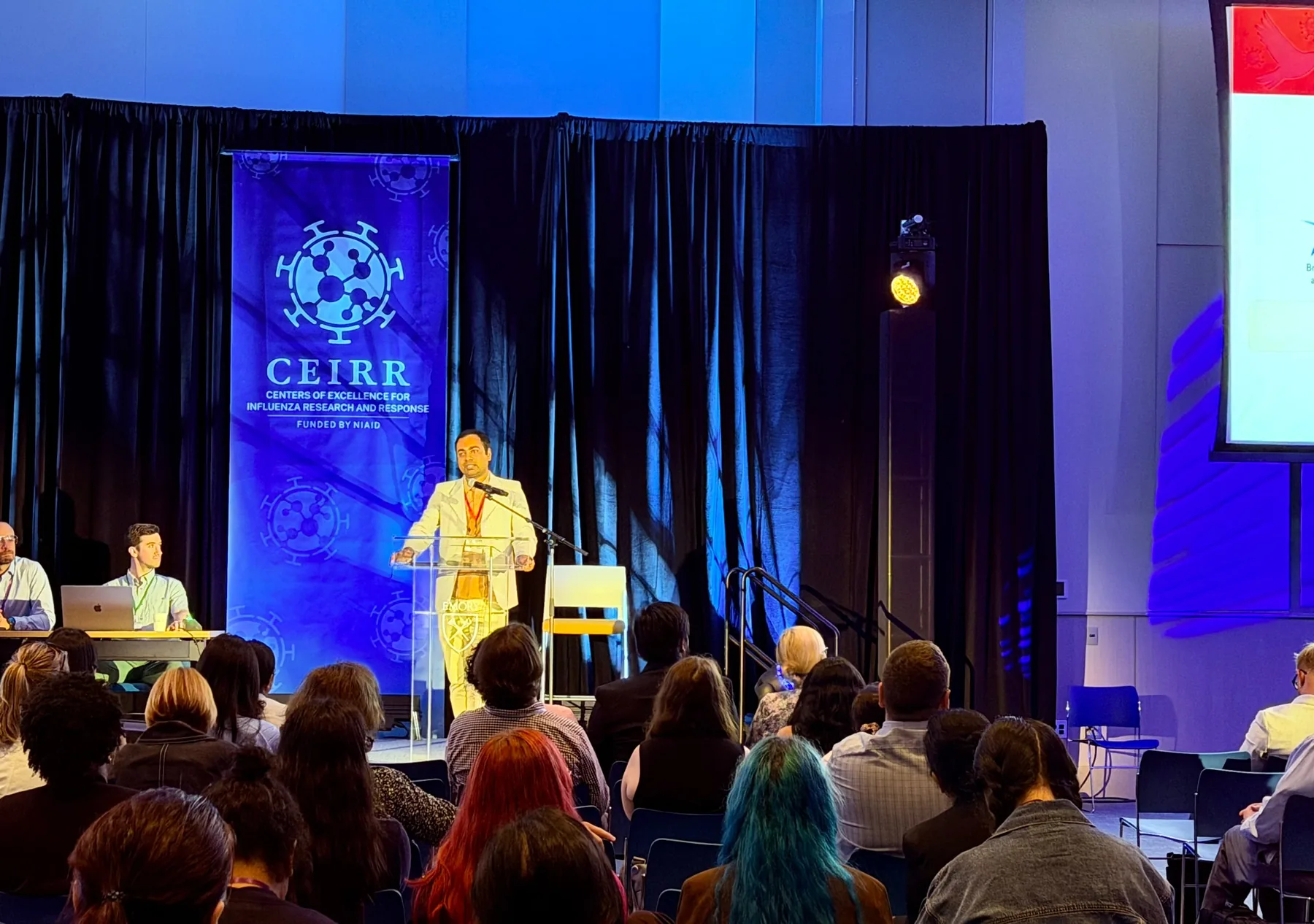
    M H M Mubassir presenting research at a scientific meeting 2026
    Presenting research on viral evolution and structural biology.
    Conference presentation

    An evolutionary trajectory of H5 hemagglutinin phenotypes across U.S. clade 2.3.4.4b.

    Ecology and Evolution of Infectious Diseases · Virginia Tech · Blacksburg, Virginia

    2026Presentation

    An evolutionary trajectory of H5 hemagglutinin phenotypes across U.S. clade 2.3.4.4b

    Ecology and Evolution of Infectious Diseases · Virginia Tech · Blacksburg, VA · June 1 to 4

    2026Presentation

    Phenotypic flexibility, rather than optimization, governs pandemic potential

    CEIRR 5th Annual Network Meeting · Emory University · Atlanta, GA · May 26 to 29

    2025Poster

    An integrative atlas of receptor-binding evolution in U.S. H5N1 2.3.4.4b viruses

    CEIRR 4th Annual Network Meeting · University of Georgia · Athens, GA · May 27 to 30

    2024Poster

    Integrating molecular dynamics and phylodynamics to unravel sialic-acid and HA interaction patterns in avian H5 2.3.4.4b influenza

    CEIRR Conference · New York, NY

    2022Poster

    Establishing a proline scanner for stabilizing virus class I fusion proteins

    RosettaCon · USA

    2017Presentation

    Structural dynamics of endogenous peptide AtPep1

    ASIA International Multidisciplinary Conference · Malaysia

    10 / Science in practice

    Scientific exchange,
    beyond the screen.

    Research grows through shared ideas, thoughtful conversation, and engagement with the wider scientific community.

    M H M Mubassir discussing protein structure with a colleague
    Protein structureScientific exchange around protein modeling, design, and structural biology.
    M H M Mubassir in conversation with a colleague about predictive biology
    Predictive biologyCommunity conversations on emerging methods in AI and protein science.

    12 / Contact

    Let’s connect across
    evolution, structure, and phylodynamics.

    For research discussion, collaboration, invited talks, or academic correspondence.

    mhmmubassir@uga.edu